Showing posts with label Elizabeth David. Show all posts

Friday, 5 September 2014

Oppede-le-Vieux


It began with the sparkle of lights on a distant hill. Every night we stared into the far distance from the terrace at the ripples of the Luberon ridge as it darkened and the lights coming on over the vast floor of the valley. With binoculars we could see Roussillon, with Gordes behind it on the northern rise towards Mont Ventoux. And on the furthest point of the Petit Luberon on the south side, was a collection of lights in the shape of a perched village - but which village was it?

At first, we thought it might be Lacoste, its castle lit at night for the summer arts festival with necklaces of streetlamps below. But that was geographically impossible; what we were looking at was a great deal further away. Maps were fetched and proved inconclusive, as did Google Earth. The only way to find out was to set a course west and go there.

We knew more or less where to start. First, to see a friend who lives in Murs, not far from Gordes, high on the hills opposite Bonnieux and Lacoste. From her garden, we strained our eyes into the rolling blue hills. We headed towards Les Taillades, which was our best guess; it was at the end of the Petit Luberon and was bolstered by some promising internet research. But when we got there, it just wasn't high enough to be a candidate. At Robion, also on the list of possibilities, the Vieux Village was higher than the part we usually dash through on the way to Cavaillon and Marseille airport, but again wasn't high enough. What we'd been seeing, was right at the top of the hill. A hill that had disappeared.

So we had lunch (always important on a quest) in Robion, and considered our options. The breakthrough was made when I asked someone to look at a blurry photo I'd taken. "That's Oppede-le-Vieux you're seeing, no doubt about it," I was told. "But what's the hill behind the end of the Petit Luberon?" I asked, "I'm sure that's where the lights are - but from here there doesn't seem to be a hill further on." This was true, and had been the subject of some heated debate. Perhaps it was another one of those French country mysteries, like the village that you never find again.

Another look at my photo. "That could be the Colline de St-Jacques at Cavaillon. It does have a chapel on the top and cliffs that are illuminated at night. But it won't be that - too far away. It's Oppede-le-Vieux." So that's where we went.


We did know the village, and it had been on our list of possibilities, though largely discounted because it wasn't in quite the right place, clinging as it does to the wooded cliffs of the Petit Luberon. A haunting place, with a melancholy atmosphere that still lingers in bright sunshine. It dates from the 12th century, when its position was defensive. In the bloody battles and religious turmoil of the middle ages, it was a stronghold as well as a seat from which atrocities were launched, but by the beginning of the 20th century it had been abandoned. It was north-facing: cold, dark and damp in winter, and too far from the farmers' fields.

 
Oppede-le-Vieux came back to life during the 1940s, when it was claimed by a commune of artists, including Consuelo, wife of the celebrated French airman and author Antoine de St-Exupery. These incomers began to restore many of the crumbling stone houses, but even now, as you walk higher and higher up the narrow cobbled paths to the ruined castle, there is a pervasive sense of mystery. What happened in this place of shadowy overgrown streets and steps that seem to climb nowhere?


The elegant 12th century church of Notre Dame d'Alydon is the reward at the end of the stony path, from where the panorama reveals the full expanse of the western Luberon valley and a sighting of the white stony peak of Mont Ventoux.

 
From here, you can see the village of Menerbes, with its characteristic shape of a ship run aground on the lower hills. The photo below was taken with a zoom - if you want to see it clearer, you can click on it to enlarge. At the far left end is Le Castellet, temporary home in 1950 of the cookery writer Elizabeth David as described in this previous blog post, and subsequently bought by the artist Nicolas de Stael.

 
However, it was at this point we knew the quest was not over. In the other direction is the end of the Luberon ridge, and beyond that, form this height, is just visible the hill we thought we had lost. It's a bit faint in this photo, but it is there on the horizon, far further away than we'd imagined. What we could see from our terrace couldn't be Oppede.

 
On the way down to the main part of the village, we discussed the implications...past this pretty small chapel, La Chapelle des Penitents Blancs...


...and this blocked-up doorway with the date 1721 carved into the stone lintel...

 
...until we reached the shady courtyard of Le Petit Café in Place Croix.


Some delicious mandarin and sharp lemon sorbets helped the thinking process. But it wasn't until we got home that the wonders of the internet helped us to the solution. Pictures found there of the Colline de St-Jacques that looms above Cavaillon, provided matching rock patterns and proof that this was what we had been looking for. On its summit is a chapel, lit at night above sheer rocky cliffs that are also illuminated. And amazingly, the night skies are so clear that we can see it from our west-facing terrace almost forty miles away.

Tuesday, 12 June 2012

The artist at Le Castellet


Le Ciel Rouge, 1952

One trail always leads to another…and so my discovery that the cookery writer Elizabeth David lived for some months in a large house in Ménerbes far more associated with another famous name from the 1950s inevitably made me want out find out more about the artist Nicolas de Staël. Who was he and what brought him to Le Castellet?

As it turned out, it was a romantic, bohemian and ultimately tragic tale, all too fitting for the gothic undertones Elizabeth David had sensed in the fortified medieval manor house (post here).


Nicolas de Staël was born in 1914 into an aristocratic Russian family in St Petersburg. Five years later the family was forced into exile as a result of the Bolshevik Revolution. When both their parents died in Poland, he and his two sisters were sent to Brussels. He studied in Brussels, latterly at the Académie Royale des Beaux-Arts. In the 1930s he travelled widely, living first in Paris, then – in search of bright light - in North Africa where he first met his partner Jeannine Guillou in Morocco. At the beginning of World War II, he joined the French Foreign Legion, and fought in Tunisia.

By the end of the war he was living in Nice. During the occupation life for an impoverished immigrant was hard and he supported his sick wife, Jeannine, her son from an earlier relationship, and their daughter by working as a furniture polisher. Jeannine died in 1946, in childbirth according to some sources, or of an illness brought on by malnutrition, according to others. De Staël met Françoise Chapouton in the spring of 1946, and they married in May.


Back in Paris, de Staël acquired a studio near to Georges Braque's and the two painters became close friends. In 1950 he had a one-man exhibition in the capital and sold well to influential collectors. Success followed in Britain and the USA. Soon de Staël had a top New York dealer on his side.

He was evolving a distinctive style using thick impasto. Although he was painting non-figurative pictures, he did not consider himself an abstract painter, saying, "One does not start from nothing, and a painting is always bad if it has not been preceded by contact with nature."


Composition, 1949


                                               Parc des Sceaux, 1952


Agrigente, 1954

Painting directly from nature, de Staël applied brilliant flat colours with a minimum of detail to suggest the essence of a vista. This simplification of a scene that was nevertheless utterly recognisable was one of his biggest contributions to the development of modern painting. It seems to me to encapsulate 1950s modernism.

But however successful he became, the artist was dogged by insomnia, exhaustion and depression. “All my life, I had a need to think painting, to paint in order to liberate myself from all the impressions, all the feelings, and all the anxieties of which the only solution I know is painting,” he said.


Nu Couché Bleu, 1955

In 1953, although he kept his studio in Paris and travelled back regularly, he felt he could work best in isolation in the south of France. In what was then the run-down village of Ménerbes, he found Le Castellet up for sale. It seemed to offer the light and privacy he was searching for. But he was always drawn back to the Mediterranean, and soon found yet another studio within a stone’s throw of the harbour at Antibes. The brightness and colour of the Côte d'Azur was just beyond his fourth-floor eyrie: the harbour, beaches, Fort Carré and its constant marine traffic that featured prominently in his later works.


Sailboats at Antibes, 1954

In March 1955 he attended a symphony concert in Paris. Inspired by the music he left town immediately afterwards and raced back through the night to his studio overlooking the ramparts of the old town of Antibes, desperate to capture the images stirred in his mind by the music.

As soon as he arrived in Antibes he began work on the painting. He worked without food or sleep, like a man possessed as the paint took shape on the vast canvas. As the light failed, and further work became impossible, he walked away from the unfinished painting. He grabbed some paper and dashed off three letters, then burned his sketches for all future projects. At the window of his studio he looked out for the last time, then jumped into the rue de Revely, several floors below. Late that evening, a neighbour walking her dog found his twisted body. He had died instantly, at the age of 41.

Had the balance of his mind been disturbed by a recent meeting with a disparaging art critic? This became the accepted and enduring legend. Yet there was no question that he was commercially and critically successful, with a steady demand for new works. He had suffered much in his personal life, though, from exile to the early loss of his parents and then Jeannine. Perhaps it was all too much, and in the end, art could not compensate.


                                                  Nu Couché, 1954

His paintings are still highly desirable – perhaps more so than ever. Nicolas de Staël’s Nu Couché, painted in Ménerbes in 1954, was sold last year in Paris for €7 million, the auction record for any work of art in France in 2011.

Sunday, 10 June 2012

Elizabeth David at Ménerbes


I do love a literary puzzle. If it involves a writer I admire and a geographical location, I’m in seventh heaven. Sometimes the mystery can take years to solve and requires a lucky break to provide the answer, and so it was with this conundrum: which was the house where Elizabeth David lived for a few months at Ménerbes?

Of all the British women writers of the 20th century, perhaps it is cookery writer Elizabeth David who brought sensuousness to the widest reading public. When she wrote about aubergines, courgettes, garlic and aromatic herbs, they were not widely available and her descriptions evoked the tastes, aromas and brightness of the Mediterranean in the grey of Britain’s post-war rationing. She was far, far more than a collector of recipes: her writing captured a sense of time and place that was uplifting and inspirational. Many people claim that Elizabeth David began the transformation of the nation’s palate to the kind of food we eat today.


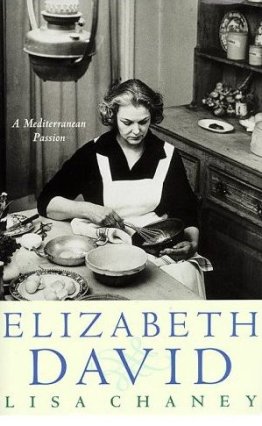
It must have been at least five years ago that I read Elizabeth David: A Mediterranean Passion, Lisa Chaney’s enjoyable biography of this woman whose adventurous life – born into privilege, she abandoned England for a yacht and a rackety lover – included escaping from the South of France in World War II via a Greek island and Egypt, where she worked at the Ministry of Information and socialised with an artistic and literary set that included Lawrence Durrell, Patrick Leigh Fermor and Olivia Manning.

In 1950, shortly after delivering the manuscript of French Country Cooking, Elizabeth and a couple of friends rented a huge draughty house in the Vaucluse at Ménerbes, in her own words, “a crumbling hill village opposite the Luberon mountain”. She was there for some months from late winter to early summer.

“How you would laugh your head off if you could see me in this tumbledown old Castle of Otranto,” she wrote to her sister, “with Romney (Summers) stacking logs on a great open fireplace as large as the town hall, and carrying his little khaki bag down to the village every day for the shopping. The weather has been a disgrace, the place as cold and wet as Charity. A fog comes up from the valley (or down from the hills) every night and in the morning you can’t see out of the windows.”


It wasn’t a particularly happy time. Even in May, the weather was terrible. Rain lashed at the old fortified manor, a constant stream of visitors arrived expecting to eat and stay over, and everyone drank far too much cheap wine, exacerbating bad tempers. On top of that, the “relentless screaming” of the Mistral drove her and her many guests “perilously close to losing our reason”.

Although there was one guest who remained popular. “Hamish doesn’t get up till lunchtime and most of his working hours are occupied fetching wood for the fire and doing the flowers.” For those who like literary asides as much as I do, Hamish was Hamish Erskine, bright young thing of the 1920s and son of the Earl of Rosslyn, known by everyone to be homosexual with no interest in marriage for form’s sake – everyone, it seems, except Nancy Mitford who, in their youth, stubbornly persisted for several years in her belief that they were engaged.

When the sun eventually reappeared in June, Elizabeth was exhausted, shattered by the sheer hard work (there had been some local help but not nearly enough) of having so many people around, catering for them and trying to work. In addition to research – including taking buses to Avignon’s markets - and writing, there had been the proofs of French Country Cooking to deal with.


I was hooked. I wanted to see the house where all this drama took place. There is a picture in Lisa Chaney’s book, captioned ‘The Provençal “Castle of Otranto” where Elizabeth stayed in 1950’. It does indeed look bleak, higher than the valley floor of fields. Obviously the first thing to do was to do an internet search, but google drew a blank with “Ménerbes + Otranto”.

Of course, I should have paid attention to the inverted commas. Otranto, it transpired, was Elizabeth David’s allusion to the title of a novel by Horace Walpole, The Castle of Otranto, A Gothic Story. Published in 1764, it is generally accepted to be the first gothic novel, and the opening salvo in a genre that would become wildly popular in the later 18th and early 19th centuries. Perhaps it was her way of saying it had been a house of horrors.

In the present, it seemed to me that it was the kind of place that might well be a chic boutique hotel now but more searches brought no match. From the photograph, I imagined the house was set on a small hill on the plain a little apart from the village. I scoured a large-scale map, wondering if I could find the pattern of roads and so pin down the precise location that way, but that didn’t work.

During various visits to Ménerbes and the surrounding countryside, I had the picture of “Otranto” in my mind but never saw a building like it. There wasn’t much point in asking anyone in the village about Elizabeth David – she had been there for such a short time and wasn’t well known in France. At one point I did think about taking the picture to a local estate agent and asking, but that seemed...well, a little obsessive. And so the mystery remained.

Until, quite by chance, I found it – or rather, I found a drawing in a book. I had bought Patrick Ollivier-Elliott’s Luberon Pays d’Apt: Carnet d’un voyager attentive (Trans: An observant traveller’s notebook) and there it was. In fact, I had to bring it back to England to check it against the picture in Lisa Chaney’s book before I could be sure, but it was the right house. And it had a name: Le Castellet.


From then on it was easy to discover that Le Castellet stands on the western spur of Ménerbes, a village that sits like a ship on a long rocky outcrop. The ‘little castle’ has a long history of its own, including a honourable part in the religious wars of the 16th century when the villagers withstood a force of 12,000 Catholic troops for 14 months, much of the action focusing on Le Castellet.

It’s reached by walking up through the medieval part of the village on the narrow streets towards the church and the cemetery. There are lovely views all around, of the Luberon hills and the orchards and vineyards below, and finally there is a view down to Le Castellet from the walls surrounding the church: still completely recognisable from the picture in the biography.  


A few years after Elizabeth David’s stay, the property was sold to abstract artist Nicolas de Staël (1914-55), an associate of Braque and Picasso. In the early 1950s, Pablo Picasso too lived for a while in Ménerbes, as did his muse, the photographer Dora Maar. Le Castellet remains in the ownership of the de Staël family. It is not open to the public. The painting below is Ménerbes (1954) by Nicolas de Staël.


Related Posts Plugin for WordPress, Blogger...