Showing posts with label Provence. Show all posts
Sunday, 27 October 2019
The joys of re-reading Mary Stewart
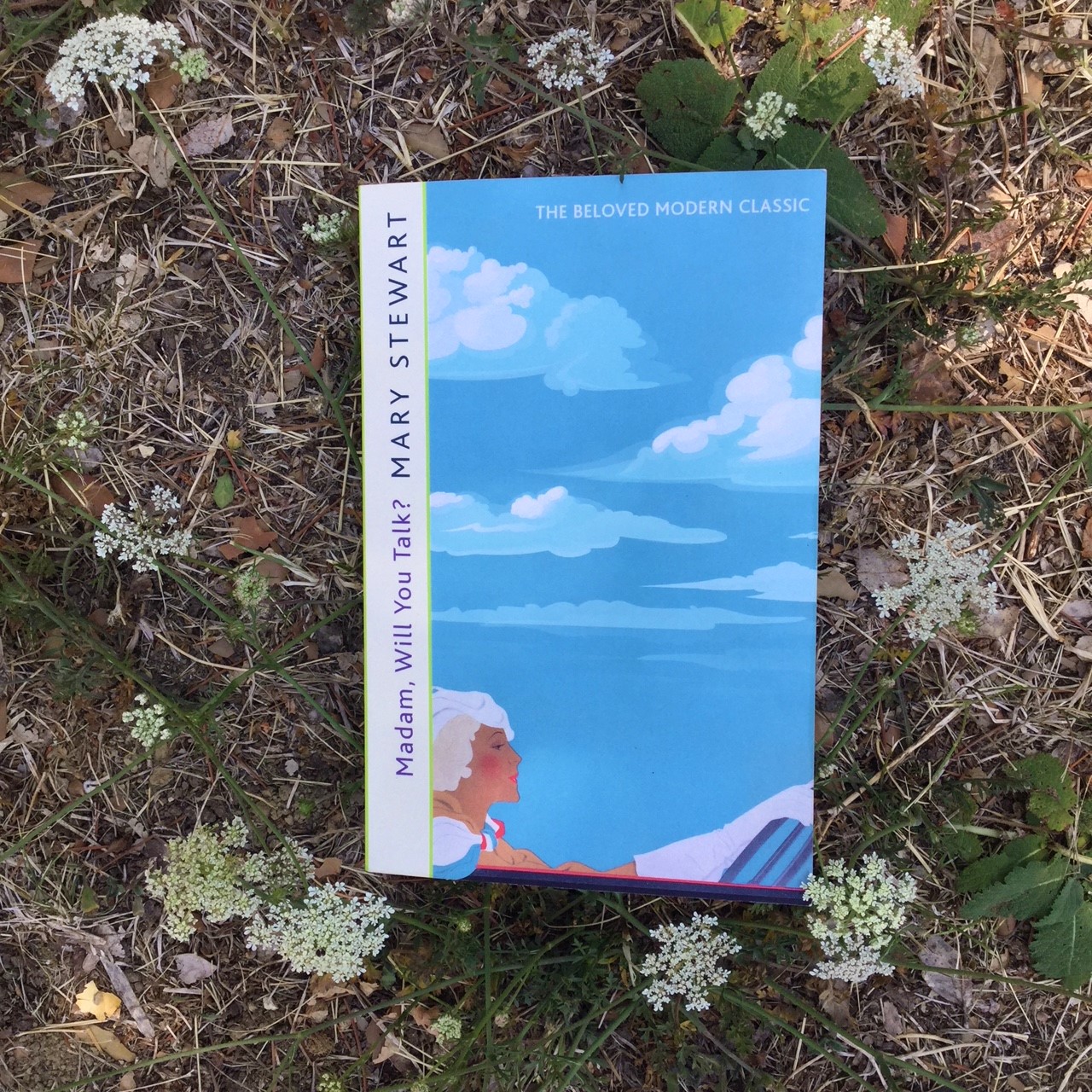
I love Mary Stewart’s romantic suspense novels: their sense of adventure and intriguing storylines, their strong-willed heroines, and most of all, their transporting settings. Her first, published in 1955, was Madam, Will You Talk?.
The narrative takes place around 1950, in a hot, dusty Provence where Roman ruins and stony, abandoned villages dominate the landscape. The Second World War still casts a shadow over the life of young widow Charity Selborne, whose husband lost his life flying RAF operations. On a summer motoring holiday through France with a friend and fellow teacher, Charity arrives at a small hotel in Avignon. Through Stewart’s lyrical descriptive prose, we feel her release and excitement at being in the balmy warmth of the south.
‘It was dusk when I set out, and the street was vividly lit. All the cafés were full, and I picked my way between the tables on the pavement, while there grew in me that slow sense of exhilaration which one inevitably gets in a Southern town after dark.’
This is the opening of a piece I've written for Perfectly Provence e-magazine. To read on, please hop over to Perfectly Provence on this link.
Tuesday, 6 November 2018
The mystery of Penelope Kite's money
In fact, the answers are all there in the book – though subtly present, like all the best clues.
For more than twenty years, Penelope was married to David, a solicitor – later, partner – in a law firm that specialised in City of London transactions. In London “the City” is shorthand for banks and large companies, the US equivalent of “Wall Street”. It is quite conceivable that David would have earned several million pounds a year from the mergers and acquisitions and share issues he worked on, and equally possible that Penelope’s divorce settlement, after a long marriage, would have reflected this at £5-10 million.
Penelope owns a house in Esher, Surrey, an affluent suburb in leafy south-west London. It might have once been the family house. A spacious five-bedroom house in Esher currently costs £2-3 million, perhaps more.
But let’s err on the side of caution and say that Penelope bought a smaller house in Bolingbroke Drive after the divorce. Even that would most likely be worth more than £1 million. When she moves to the south of France, she rents it out. A quick look at rental prices for a well-presented three-bedroom house in the area shows that she could make £3000-4000 a month. That alone would be a very decent amount for a single person to live on.
But there’s more. Penelope is an only child. Both her parents have passed away. No further details are given in the first book, but it’s revealed in the next that Penelope’s father was a doctor, a GP and police surgeon, and that the family lived in Bromley, another leafy suburb of south London. Penelope would have inherited her parents’ entire estate, including a house that could easily have been worth £2 million, and other investments.
Penelope can well afford to buy a run-down farmhouse in the Luberon with a realistic asking price of around €800,000, which converts to c. £700,000. She can also afford substantial renovation work, along with croissants, bottles of rosé and new clothes – and the “nearly-new” Range Rover she buys for the hilly Provençal roads.
Fairly early on in Death in Provence, Penelope sees the red Ferrari that keeps popping up on the local roads and muses about where she fits into the social scale: ‘There was an interesting mix of people here in August, she thought: happy holidaymakers from northern Europe; artists and photographers; walkers and cyclists; the farming community; the butchers and bakers and candlestick makers who gave so much pleasure to everyday life; and some extremely rich people – Parisians and Swiss and Americans - staying at their second homes. Penelope wondered if people would assume she was rich. She didn’t think she was. Comfortably off, perhaps. And, for the first time in her life, reckless with a lump sum.’
Penelope doesn’t see herself as belonging to the Ferrari-driving classes. But, like most well brought-up, conventional British women, she is being discreet about her own wealth - which many might consider substantial.
But there’s more. Penelope is an only child. Both her parents have passed away. No further details are given in the first book, but it’s revealed in the next that Penelope’s father was a doctor, a GP and police surgeon, and that the family lived in Bromley, another leafy suburb of south London. Penelope would have inherited her parents’ entire estate, including a house that could easily have been worth £2 million, and other investments.
Fairly early on in Death in Provence, Penelope sees the red Ferrari that keeps popping up on the local roads and muses about where she fits into the social scale: ‘There was an interesting mix of people here in August, she thought: happy holidaymakers from northern Europe; artists and photographers; walkers and cyclists; the farming community; the butchers and bakers and candlestick makers who gave so much pleasure to everyday life; and some extremely rich people – Parisians and Swiss and Americans - staying at their second homes. Penelope wondered if people would assume she was rich. She didn’t think she was. Comfortably off, perhaps. And, for the first time in her life, reckless with a lump sum.’
Penelope doesn’t see herself as belonging to the Ferrari-driving classes. But, like most well brought-up, conventional British women, she is being discreet about her own wealth - which many might consider substantial.
Sunday, 26 August 2018
Lazy Sunday in Provence
After a "soft launch" of ebook and audio only, the paperback edition of Death in Provence is out now from Orion in the UK! A blog tour has brought forth a raft of lovely reviews and all's well with the world. In the US, readers have only to wait until February for the Harper hardback and ebook, but I am going to run a giveaway open to all so there's a chance to be an early reader.
In the meantime, here's a introduction to the main character, Penelope Kite in a piece written for The French Village Diaries blog - a Lazy Sunday in France:
Our accidental sleuth Penelope Kite loves Sunday mornings in Provence. Even though she no longer works nine-to-five as assistant to an eminent forensic pathologist, she still savours that delicious Sunday feeling of waking with no pressing need to leave a soft bed when the sun slants through the open shutters. No family to prepare lunch for, no housework, just lovely croissants for breakfast on the sunny terrace of Le Chant d’Eau, her recklessly purchased old farmhouse with views of the Luberon valley.
Cello practice (what bliss to be able to play again, letting the notes rise into the open air, disturbing no one) is followed by a quick swim in the pool. The pool looks glorious in the walled garden now, with lavender lining the walls and four sentinel cypress trees. Fortunately, there is no dead body floating in it today.
The sun is already hot as she prepares to go out tat-hunting at a classic Provençal brocante.
Continue reading...
"This was such an entertaining and refreshing read. With eccentric characters and a twisty but, at the same time, hilarious plot, you just need to sit down and enjoy this captivating mystery set in the beautiful South of France."
Tuesday, 5 December 2017
Exciting news!
Thrilled to be able at last to share some great news...a new two-book deal with HarperCollins in the USA and Orion in the UK. But there's a twist! I'm writing with my husband Rob, aka The Panto King for long-time readers of this blog.
It started just as a bit of fun, but working on it was so enjoyable that it soon took on a life of its own. Here's the premise:
"Introducing Penelope Kite, less femme fatale than a fatal combination of Agatha Raisin and Bridget Jones, as she investigates a ...mystery in the beautiful setting of A Year in Provence. The first in a series of cosy detective novels featuring Penelope and her circle of local friends and acquaintances, set in recognisable locations in the South of France."
So I hope that appeals. These books will be rather different from the previous ones: the lush locations will all be there, but alongside banter, good humour and comic moments to lighten the dark deeds that Penelope uncovers. Can't wait to share more when I'm able to!
Friday, 6 January 2017
Lavender - off the beaten track
When the lavender is harvested in Provence at the end of July, a heavenly scent is carried on warm evening breezes. Alerted by the first wafts of perfumed air, from our terrace we can sometimes see the smoke rising from the other side of a small ridge. The distillation has begun.
In the small purple fields woven into the landscape of the hills around the town of Apt in the Luberon, the stills are sometimes placed in the very fields where the flowers have been grown. In this part of Provence lavender farming is a far cry from the huge commercial concerns of Sault and Valensole, more like smallholdings tended in the traditional way.
If you would like to read more, please hop over to the web magazine Perfectly Provence, where I've written a guest post. For those of you who love the South of France, and haven't discovered this site yet, you are in for a treat!
Wednesday, 23 November 2016
November in Provence
November in Provence has been glorious. Each day the hillsides have been turning a deeper gold, and the bright sunlight brings everything into sharp relief. The lavender fields (above) show ribs of muted grey-green. Apricot and cherry trees have turned a flaming red like orchards of lit torches, and our unpicked muscat grapes are purple against glowing yellow leaves on the trellis that gave shade to our summer dining table.
Been having a lovely time seeing friends and relaxing, and wandering around the Luberon hill villages after a busy time in England during September and October. It's all much quieter than when we were last here. The restaurants have autumn menus - we had a special Game and Wild Mushroom one at a local auberge the other night, featuring tiny tasters of delicious pumpkin soup and wild boar, chanterelles with truffle and seared scallop, venison, a rather experimental black truffle and vanilla ice-cream (not sure about that one) followed by a chocolate bombe.
One a cloudless day there's often warmth, too. Here is a glimpse of the castle at Gordes,, and now is the time, without all the tourist crowds, to wander round this spectacularly beautiful village with its panoramic views. Here I am, on a slightly colder day, in Goult.
It was mellower, and slightly misty that day, and the view from the top by the old windmill was softer and more green than in other higher parts of the valley.
Finally - wishing Happy Thanksgiving to all my friends and readers in the USA!
Saturday, 1 October 2016
The Scent of Night, a short story
The sun cut sharp as a blade across the floor tiles. Penny felt the warmth on her face as she padded to the window and pushed open wooden shutters to embrace the morning. Beyond the courtyard and the garden below, the wide blue ripples of the Luberon hills hung like a great curtain across the landscape. The only sounds came from the first sleepy cicadas.
Perfection: the beauty and peace of a month in Provence; the summer heat and light. This rambling farmhouse they had rented hadn’t disappointed, far from it. Inside and out, there was space to breathe and long, calming views from the hillside.
Trees whispered in cooling breezes. Sunk into the garden was a swimming pool with water the colour of glacier melt.
“Are you going down to get the bread or am I?” John’s voice carried a plea, a hungover-sounding appeal to her good nature.
He was still a sheeted walrus on the bed.
“It’s your turn,” said Penny. “And they’re your guests.”
And I wish they’d go, she thought. Not even in the sense of “leave”, just go to the boulangerie one morning for once instead of expecting to be waited on as if they were staying in a hotel. Because this holiday was supposed to be their anniversary treat (twenty-five years married!) but it hadn’t quite been the paradise she’d hoped for.
It had been fun while Sam and Lottie were staying, but they were adults now with jobs and commitments of their own, and plans that didn’t include spending too much time with Mum and Dad. After the children, their partners and assorted friends had gone, Penny and John had a huge empty house in the South of France to themselves. That was fine with Penny.
She had visions of sitting in the shady courtyard under a fragrant fig tree and reading, or wandering round gorgeous villages looking at brocante markets, and drinking glasses of light, fruity rosé at lunchtime, all the things she never seemed to have time to do at home.
But it hadn’t worked out like that.
Instead of drifting dreamily around lavender fields and spending long lazy afternoons doing whatever we want, Penny thought as she scooped up the car keys and her straw basket for the bread and croissants, I have been running a small hotel and restaurant for all the friends and family John invited to drop by as it seemed a shame not to make the most of it. It was amazing how many of them had taken up the offer.
And now, after three weeks of hot-flush-fuelled cooking and cleaning and bed-making, John’s old workmate Simon was the final straw. He had turned up, newly divorced, with a younger woman in tow – and she was awful. Her name was Sassie (Saskia), she was a pin-slim, groomed corporate lawyer in her early thirties, and she lay by the pool all day checking her Blackberry. And it went without saying she never lifted a finger to help and looked with pity at Penny and the cellulite that no sarong could mask – though not enough pity actually to get dressed and volunteer to do the supermarket run for a change, of course.
She was waiting for Penny downstairs, a vision of blonde good health in a wisp of beachwear.
“Are you going into town?” she asked. “Because if you are, could you get me some more sun cream?” Saskia studied one slim bronzed arm. “Factor 15 ought to do it.”
Penny opened her mouth to suggest that perhaps Sassie might like to go herself, as the chemist was only a few doors away from the bread shop, but closed it again as she realised that left to Sassie there would be probably be no breakfast. She seemed to exist on hot water and slices of lemon.
“Who owns this place, again?” asked Sassie. Penny had the impression their guest had had a good nose around while she was alone downstairs.
“A composer and his wife.”
“It’s all a bit of a mish-mash, isn’t it?”
“I rather like it,” Penny said, beginning to walk off. She supposed some of the old French furniture had seen better days. The large splashy paintings on the walls were flaking. And the brown wood statue of a monk in the hall was a little unsettling, as was the wall sconce of an arm reaching out of the iron frame with a candle. But it was shabby chic, wasn’t it? It was perfect for this house of white walls speckled with the patina of time and gleaming terracotta tiles on the floors, as were the rusty garden chairs and odd stone artefacts outside.
Anyway, Penny thought but didn’t say, if this doesn’t suit you, go somewhere else. But after three days Sassie and Simon showed no sign of moving on.
Later that morning Penny had returned with the supplies (and the sun cream which Sassie had just picked up from the kitchen island and hadn’t even offered to pay for), and was making a cheesecake for dinner. She absent-mindedly licked the mixing spoon then started to scrape the bowl. She felt fat and dragged down. It is a truth universally acknowledged (though not nearly often enough), thought Penny, that a woman approaching 50 is in need of a husband who likes a good armful because, by God, that was what he’d be getting.
Through the kitchen window she noticed that Sassie had taken her bikini top off. John – straining to hold his stomach in – was eagerly adjusting the parasol above her and taking his time about it, while Simon handed her a drink. Unless he leaves me for a younger model, of course, Penny hastily revised her homely assumption. He was still a good-looking man, big and broad with a lovely, generous nature. A younger woman would be lucky to have him.
The drinking went on throughout the lunch Penny laid out on the terrace: a vibrant tomato salad on a deep cobalt plate, goat’s cheese and sweet onion tartlets, pâté and fresh bread. The sun seared down from the bluest of skies. When everyone else slunk off for a siesta, a sober Penny cleared the dishes away, made herself a cup of coffee and went down to the pool with her book.
She tipped her face up to the heat, luxuriating in the time alone.
That evening, sunset burned a rosy tangerine streaked with gold. Everyone assembled expectantly by the table on the terrace. Penny produced more chilled wine and a sumptuous dinner, and repeated the catering process. Sassie only picked at the sea bream and ribbons of courgette. She was comfortably installed on a cushioned chair telling the men about the high-profile cases she had worked on, making them laugh and admire her even more with tales of defeated opposition and great men brought down, as Penny got up and cleared away.
In the kitchen she cut herself a hefty misery slice of cheesecake as she surveyed the stacks of plates. A light tinkling of laughter from Sassie wafted through to the kitchen. Penny drowned her out by crashing pans loudly, but no one seemed to notice.
After midnight, Penny lay in bed unable to drop off to sleep. Next to her, John had started to snore gently. The trouble was, Penny thought, I’m on my own with this. I am just myself, and Sassie is a sex goddess and invincible career woman. She tried not to think about what was going on in the bedroom down the corridor. But all that success shouldn’t stop her from behaving with basic courtesy, even if friendliness was too much to hope for.
Perhaps a fellow grumpy old woman might have noticed Sassie’s selfishness, but the men wouldn’t have a clue. And in comparison, there was no doubt about it: Penny had let herself go. She was wondering rather reluctantly whether she might have to start going to some kind of gym, when she gradually became aware of a scent carried on the air. It was a lovely perfume, of vanilla and sweet lavender, which then became a kind of chocolate smoke. Minute by minute it was becoming stronger, until it seemed to pervade the room.
It was either coming through the open window from outside, from some night-fragrant plant down in the courtyard – or was it a scented candle that Sassie had lit? Penny got out of bed and went out on to the terrace outside the bedroom and breathed in deeply. The scent was carried off by a faint breath of wind in the dark. Above was a luminous arc of silver stars, bright and burning in the black sky. All was still and quiet.
It was strange; the scent didn’t seem to be coming from the garden. Penny waited a while, enjoying the profound silence, then went back to bed. In the darkness, she lay on her back enveloped by the lovely scent from a source that was still mysterious and closed her eyes.
But when she mentioned it the next day, Sassie didn’t know what Penny was talking about.
“I can assure you it was nothing to do with me,” she insisted.
“It was quite pungent – lavender and rose and vanilla and chocolate and burnt almonds. Really strong and smoky. I was wondering if it was a candle or something…” persisted Penny.
But Sassie shook her head, and denied everything. “I only ever wear a very light delicate perfume. I absolutely loathe anything strong and smoky. The very thought gives me a headache and makes me want to run.”
That evening, at Simon’s suggestion, they went out to a restaurant on the edge of a beautiful hill-top village. Penny had put on a new maxi-dress and pulled herself together. She took a little more time and trouble with her make-up and decided that whatever happened she would make an effort. It was so lovely to be taken out to eat this evening instead of taken for granted.
From their table outside under a vine canopy, they could see for miles. All down the valley, the distinctive vertical crevices in the ridge of the mountain darkened as the air softened, until they seemed to be great dusky rivers cascading down to the valley floor.
“To Penny,” said Simon, raising his glass, “Who has looked after us so beautifully. Very much appreciated.”
It was so unexpected, Penny forgot any lingering annoyance. Candles were lit, and dishes of mouth-watering Provençal food arrived. Under the table, John squeezed her hand. Penny felt herself relax in the warmth of the evening and the effect of the wine, and let Sassie be the centre of attention.
They all drank too much. Simon constantly leaned back in his seat and ordered fresh bottles of palest rosé. Penny, sitting next to him, noticed the criss-cross patterns of red veins in his cheeks, and the way he looked at Sassie as if he couldn’t believe his luck that she was with him.
Everyone except Sassie finished with a trio each of crème brûlées, infused with lavender, thyme and peach. Penny sat back, replete and glowing from a glorious afternoon in the sun. But when the bill came and Simon tried to pay, his credit card was refused and it was John who settled up.
Back at the house, another bottle was freed from John’s stock.
“Push on through, eh?” roared Simon, pulling the cork.
“I’m going to bed,” said Penny. She didn’t want so much as another sip. She heard Sassie coming up about half an hour later, but the men stayed up into the early hours, drinking in the garden.
The next morning, though the sky was cloudless again and the heat rising, there was a distinct chill in the atmosphere.
Sassie was fuming.
“We are leaving, as soon as we can,” she hissed as they came downstairs.
Simon blanched. It was clear from her tone she expected to get her way.
“And as for you,” she said to Penny, though barely acknowledging her with a glance, “Drenching our room with that suffocating scent in our room after I’d specifically said I can only tolerate the lightest of fragrances… It gave me the most appalling night, made me physically sick. I can’t think why you did that.”
“But I didn’t –”
Sassie waved her words away imperiously. “You obviously don’t want us here, so we’re leaving, and that’s that.”
Penny decided to offer no resistance.
An hour later they were saying goodbye: Simon reluctantly and apologetically, struggling with the bags. Sassie strode ahead towards Penny, but the four-inch heels she’d put on for travelling caught on an uneven paving stone as she approached, throwing her towards Penny and forcing them to embrace far more closely than either intended. She was bony as a starved child, thought Penny, as they pulled apart awkwardly and exchanged thin smiles. She smelled of lemon pith, sharp and bitter.
“Bye, then,” said Penny.
“Was it you?” asked John. He didn’t seem concerned in the slightest.
“No, it wasn’t! I didn’t go near their room, not since I delivered the fresh towels Sassie asked for, but that was yesterday morning.”
She wondered whether to mention the mysterious perfume, but then John said: “Poor old Simon.”
“What?” Poor old Simon, the successful entrepreneur with the stunning younger woman? Had her hearing gone now?
John was positively jaunty as he measured out coffee and filled the pot with water. “He poured it all out last night. He’s pining for his ex-wife and he’s taken a massive loss on his last deal. There’s not much left, and no doubt when Sassie finds out, she’ll be off permanently. I know her sort.”
“I thought you thought she was marvellous,’ said Penny.
“I was being nice, for Simon’s sake. He hasn’t had much luck lately.”
Penny sat down with relief. “She was so irritating,” she said.
“Not a woman of substance,” smiled John, reaching out for her.
“Like me,” she said sadly.
John bent his head and kissed her gently. “In all the best ways.”
“Three whole days left to ourselves,” said Penny happily.
She pottered into the sitting room and noticed a book had fallen off a shelf. It was an illustrated history of lavender growing and she opened it instead of putting it straight back. The first picture was a photograph of a house, this very house. A piece of paper covered in handwritten notes fluttered out. “Marthe Lincel, creator of perfumes,” Penny read, “was inspired by her childhood home, Les Genévriers. Lavande de Nuit, her most famous fragrance, was said to capture the spirit of Provence…”
Penny took the book outside and spent the whole day reading in the garden. The tranquillity and the books she dipped into were balm for her soul.
That night, she woke and smelled the perfume again. It was a soft warm caress all around her, and it was heavenly.
This is a story I wrote some years ago for Woman and Home magazine in the UK, and it appears in the anthology The Coffee Shop Book Club. I posted it in short episodes over the course of last week on Instagram, as part of the Bookstagram Gala, and I thought I ought to post the whole story here in case anyone missed a bit. I hope any readers who know The Lantern and The Sea Garden enjoyed the nod to the setting and the characters who appear in them.
My latest novel 300 Days of Sun is available in the UK for only £2.99 on Kindle and at all good retailers in the USA, including here on Amazon.com.
Saturday, 18 July 2015
Tuesday, 5 August 2014
Painting in the sun
I'm having a break from writing at the moment, enjoying the sun, reading and working in the garden. But the other day, the mood came upon me to get my paints out. I wanted to try something colourful and abstract, inspired by a conversation with an artist friend of mine who said that sometimes she just gets her brushes out with no picture in her head, and just sees where it leads.
So I found a decent-sized canvas, 18 by 24 inches, and set to daubing outside in the courtyard - I make no claims to mastery of painting - and this is the result. After a while it seemed like flowers and fruit to me, so I deliberately gave it a recognisable fig and slice of watermelon. Quite pleased, actually.
Tuesday, 13 September 2011
Figs falling
“It was one of those days so intensely alive and aromatic you could hear as well as smell the fig tree in the courtyard. Wasps hummed in the leaves as the fruit ripened and split; globes of warm dark purple were dropping, ripping open as they landed with sodden gasps.
The pulse that pumped out the sweet, heady scent was quickening as I bent down to pick the fallen figs, then pulled them apart to find insects were already drunk on their scarlet hearts.”
from The Lantern I defy anyone to look at a fallen fig like this: its heart shape and juice spilled like blood across the stone and not think Gothic thoughts... There's something very sensuous about figs, with their blatant sexual connotations, and the sweet, blowsy scent as they grow on the branch. Others lie on the grass under the tree, newly split open on impact and ripe for destruction by thirsty insects.
Those are the doomed windfalls, but here are some picked from the tree. I simply love their colours, the delicate darkness of the purple skin and pistachio greens.
And here's how we ate them. I prepared a bed of good fresh lettuce dressed with a vinaigrette of Dijon mustard, honey, red wine vinegar and olive oil. Then cut rounds of bread and topped with goat's cheese, and put on a tray in a fairly hot oven to bake with some slivers of jambon cru (Parma ham) and the halved figs, each spread with a little clear honey. Everything cooks together for about 15 minutes, or until the cheese looks done. Delicious!
Thursday, 21 April 2011
Cross-Channel reading
Travelling and reading: two great passions that often give pleasure together. Yesterday I travelled through France on the high-speed train from Avignon to Paris, and then on north through the Eurotunnel with a good book: almost flying in both dimensions, as the TGV train seems to float above the ground at up to 300 miles an hour, and the narrative drive is so true and exhilarating in Kate Atkinson’s Started Early, Took My Dog.
This is the fourth of her semi-detective Jackson Brodie books, and each one has become more daring, more convoluted and gloriously coincidental, yet always with a strong internal logic. The writing is sly and allusive, offering glinting shards of insight into characters in few words.Tilly the ageing actress, still wounded by her old friend’s success, has just one of the novel’s interweaving perspectives. Her faltering work in a northern TV drama is poignantly drawn, as is her failing memory, and denial of a creeping kleptomaniac tendency:
"Recently she’d noticed all these objects suddenly appearing in her bag – key rings, pencil sharpeners, knives and forks, coasters. She had no idea how they got there. Yesterday she had found a cup and a saucer! The emphasis on cutlery and cups suggested she was trying to put together a complete place-setting."
Haven’t finished it yet, but I know it will be this good all the way through. Like Jackson Brodie, you can rely on Kate Atkinson. Neither will let you down.
My arrival back in Kent offered a fine symmetry to the day. All the way through France I’d been, in literary terms, immersed in a very British landscape of Yorkshire tea rooms, ruined abbeys and maddening shopping centres. But waiting for me at home here was another book, this time set in Provence .
Cherries from Chauvet’s Orchard is a memoir by Ruth Phillips. Ruth is a professional ‘cellist, and the wife of the painter Julian Merrow-Smith, whose work I’ve featured before here. The book was a pre-publication review copy with a plain cover, but something about it was so right – the feel, the design and typeface - that I just dumped my bags by the front door and started reading immediately. (I think quite a few of you will understand…)
I sat down on the stairs, and was instantly pulled right back to the south of France . Because Ruth Phillips can write. I mean, she can really write; there’s a quality about her words you can recognise instantly. Here’s the Introduction:
"On February 16, 2005, Julian Merrow-Smith painted an oyster. It was 12 by 14 centimetres, about the size of a postcard. A year and 362 small paintings later, an article about the painter and his project appeared in the New York Times."
See what I mean? And a few pages in, she describes the village near Mont Ventoux where they settled in Provence and he established a studio.
"Crillon was a dreamy place perched high above vineyards, olive groves and cherry orchards, with a honey-coloured stone arch, cobbled streets, a well and a church spire. (…) Out of season, vineyards turned to rows of gnarled fists. Woodsmoke and the smell of stewing boar filled the air."
It may be the combination of her musicality and visual sense further developed by living with a painter and acting as his de facto studio assistant, that has distilled this lovely prose. Either way, the effect is quite magical, and I will return to it with a full review at a later date.
So how’s that for a good reading day? Two books: one not finished, one barely started, yet satisfaction all round. And both authors, one renowned, one still to be published, providing the very definition of travelling hopefully.
The main picture is Monsieur Chauvet’s Orchard by Julian Merrow-Smith.
Subscribe to:
Posts (Atom)